Are you thinking of teaching your kids at home? Possibly homeschooling is new to your family, or you just have kids in a new range of ages. I’ve homeschooled my kids since the beginning of our family’s school journey, from preschool through junior high. I use several homeschooling tips to make our school routine smooth and successful. Every family can use these homeschooling tips for parents. I’ve discovered the most important thing is to enforce a consistent schedule, so my kids know what to expect each day. Next, I chose a homeschool curriculum that works for our family. Finally, we do some hands-on activities to make school creative and fun!
Throughout our homeschool journey, I’ve taught my 3 kids at home using a combination of workbooks and creative activities. In elementary school, we did a lot of worksheets and art projects. In junior high, we progressed to research assignments and lab reports. Each of my kids enjoy learning in different ways, so I need to plan ahead, have the right resources, and provide encouragement to make our days go smoothly.
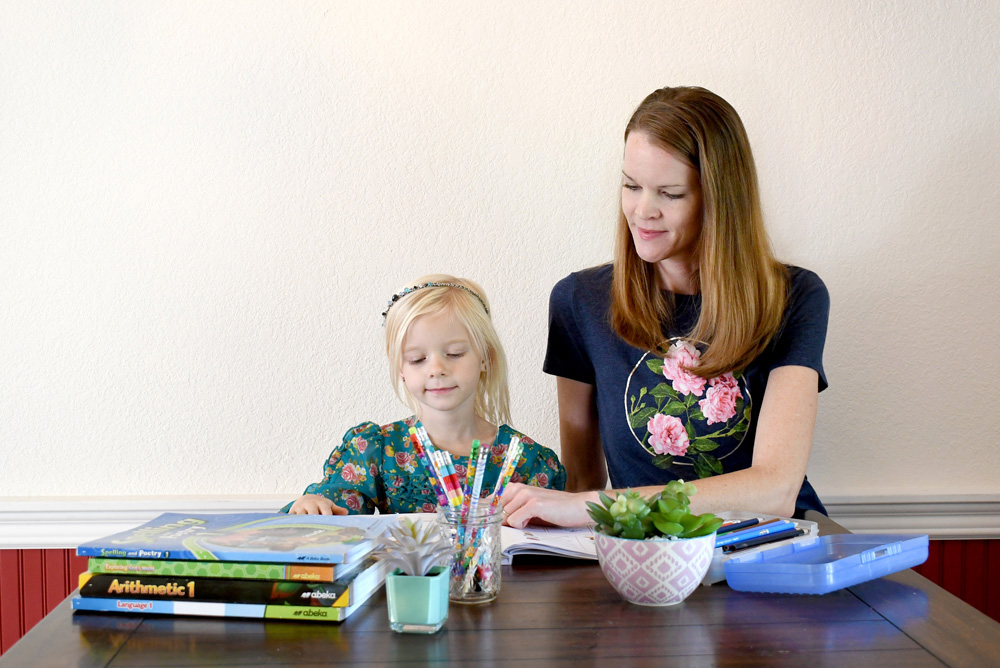
Establish a Daily Schedule
A daily schedule is a very important element of homeschool for our family. It’s my job as the mom to plan our homeschool schedule. Ideally, our family gets up at 8:00 AM, eats a simple breakfast, and we start school at 9:00. I clean up the night before so our house is organized for a new day. My kids are usually very happy to follow along when I am organized. Homeschooling is an opportunity for our whole family to be intentional! Our daily homeschool schedule usually looks like this:
9:00 am – Family Bible time & history
We read a Bible passage, discuss it, and pray together to start the day.
Next, we read a history chapter and possibly watch a history YouTube video.
10:00 – 12:00 – Workbooks
The kids complete lessons in Math, Language Arts, handwriting, and spelling. I allow my kids to take a short break when they’ve completed two subjects.
12:30 pm – Lunchtime
My kids choose their own lunch from available options. We often have charcuterie foods, Trader Joes ready-to-eat meals, or leftovers for lunch. Our kids also help clean up from lunch.
1:00 pm Quiet time & reading
After lunch we enjoy independent reading time, and reading lessons with the younger kids. After reading, kids can play quietly or do an art activity.
Schoolwork Expectations
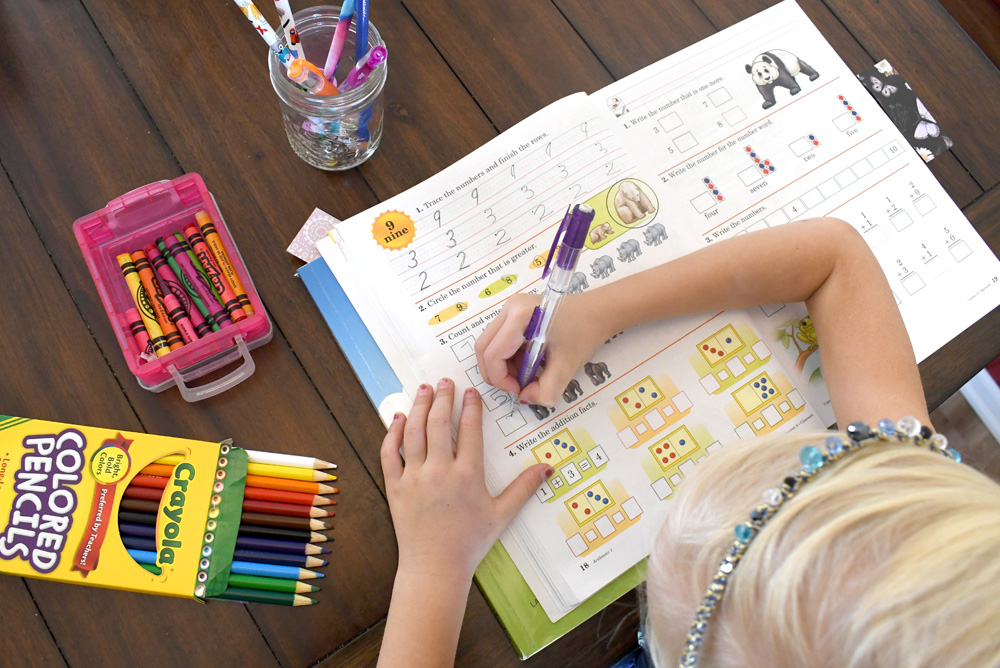
I have planners for each of my kids, which outline their subjects and worksheets for each day. I’m hands-on with younger kids, although I encourage my kids to work independently. I’ve learned that once my kids reach about 4th grade, they can easily manage their own school tasks. I am available to introduce new lessons and answer any questions. Here are some expectations I’ve had for my kids throughout the different grade levels of homeschooling.
6th – 8th grade: Kids are able to do their own work, check in with me the teacher, and take ownership of their progress.
4th – 5th grade: Kids need some help but can practice reading their own schoolwork instructions and work independently.
1st – 3rd grade: I work with my younger kids during these grades to help them understand their assignments and stay on track with schoolwork.
preschool & kindergarten: I kept young kids busy with phonics worksheets, coloring pages and hands-on activities. We also did afternoon reading lessons.
Start the Day the Same Each Day
Starting our morning the same each day is one of my best homeschooling tips for parents. I typically begin our day by calling my kids to the living room. We read a Bible passage together (or a Bible story for younger kids) and discuss thoughts and applications. I love reading from Psalms or Proverbs with our kids to reflect on God’s kindness and wisdom. Alternately, my husband often reads sections of Old Testament history, taking us through Genesis to Joshua. Occasionally the kids bring an item for Show & Tell.
After Bible time, I often read a chapter from our Mystery of History book. Occasionally, I’ll follow this with a 15-20 minute YouTube video about the day’s history topic. Our morning start typically lasts 30 minutes to 1 hour, and then I send our kids to their individual desks.
I keep our family Bible & history session fairly simple to start our day consistently. We often do more creative homeschool activities later on.
Divide School Work into Sections
I’ve discovered that my kids work harder in shorter intervals of time. I allow my kids to take a break from schoolwork when they’ve completed two subjects. My kids (now in junior high) can complete one school lesson in Math or Language Arts in about 30 minutes. Their break can include using the bathroom, getting a drink of water, or grabbing a snack.
Younger kids may benefit from a break every 3o minutes, and short play activities between their school subjects.
Consequently, breaks motivate my kids to work diligently and afterwards, feel ready to move on to the next subject.
Eat a Snack
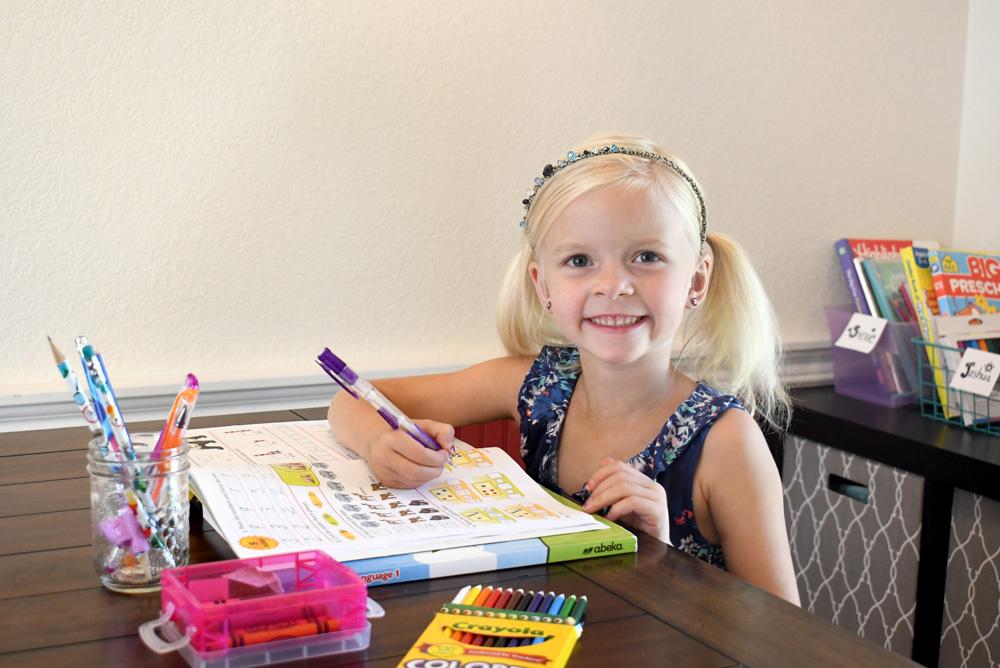
Encouraging kids with food is one of my most practical homeschooling tips for parents. Around 10:45 am, I often give my kids a snack. I typically offer relatively healthy snack options such as pretzels, fresh fruit or graham crackers. Sometimes I make a little snack tray with cheese and crackers, grapes, and apple slices. A snack break helps motivate my kids to work hard and stay focused!
Read for an Hour after Lunch
After lunch can be a tricky time to fill. I often need to clean up the kitchen and my kids typically have finished their workbooks for the day. Because of this, the hour after lunch is a great time to read a book. My kids can grab a blanket and cozy up with a novel or an I-Spy picture book. When my daughter Kiera was 8, she enjoyed reading American Girl books. Now our favorite books include the Harry Potter series, Robinson Crusoe, Treasure Island, the Eragon series, and the Circle Trilogy by Ted Dekker. Reading books is a great way for kids to explore their favorite story series and grow in reading comprehension and vocabulary.
Homeschooling Tips for Parents & Problem Solving Ideas
1. Problem: Feeling overwhelmed by all the school subjects
Solution: Start simply and add more over time.
Beginning your homeschool schedule is often the hardest part. I recommend starting with a simple routine and adding more over time. For the first few weeks of school, my elementary-aged kids often started with 3 workbooks; Math, Language Arts (phonics) and handwriting. Over the next few weeks, I’d add in some science activities, social studies discussions, history lessons, and art projects.
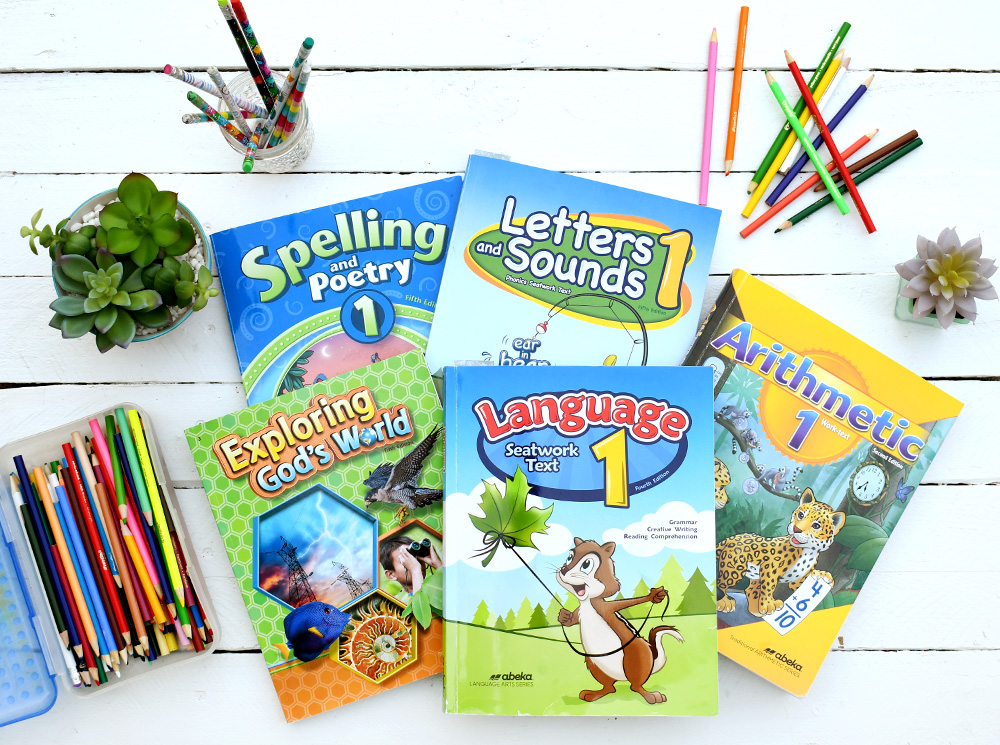
I’ve used Abeka homeschool workbooks, which are filled with colorful illustrations and hands-on learning exercises. Abeka workbooks are easy to follow and the homeschool topics advance throughout the year. The kindergarten through 3rd grade workbooks lead kids through number recognition, placeholder digits, addition, subtraction, multiplication, division, shapes, clocks, money, angles and more. The Abeka Math workbooks are especially fun for elementary school kids. Sometimes my daughter had to solve a variety of math problems in order to complete a color-by-number activity. Abeka introduces math concepts using the spiral approach. In K – 6th grade, my kids enjoyed learning math through continual reinforcement, while also tackling new math concepts each week!
In my experience, the Abeka Language Arts workbooks are also comprehensive for grades K – 6th grade. They cover all the things starting with letter sounds, vowels, consonants, blends, sentence structure, parts of grammar, vocabulary and spelling. I used these workbooks successfully with my kids for kindergarten through 6th grade. I also appreciate that Abeka workbooks introduce new concepts clearly and concisely. Typically, I don’t have to teach each of my kids a separate lesson on each new concept. However, I’m always happy to answer questions and clarify the instructions.
2. Problem: Kids don’t want to do their school work
Solution: Encourage kids to work diligently, wear a smile, and have a flexible mindset.
It helps a lot to encourage kids to work diligently, and praise their successes. This can be as simple as telling a child to slow down and write two perfect D’s during handwriting, instead of ten sloppy ones. Reward your child’s success by letting them pick out a cute sticker!
I think that maintaining a flexible mindset is one of my most important homeschooling tips for parents. Each child often learns differently. If something’s truly not working, try something else. One year, I ordered several workbooks from a new-to-us homeschool resource. I discovered that the structure of the books clearly did not work for our family. In October, I abandoned the books and ordered new books from a company I had used before. The switch was definitely a good choice!
3. Problem: Teaching kids who are different ages
Solution: Plan schoolwork and activities for each child ahead of time.
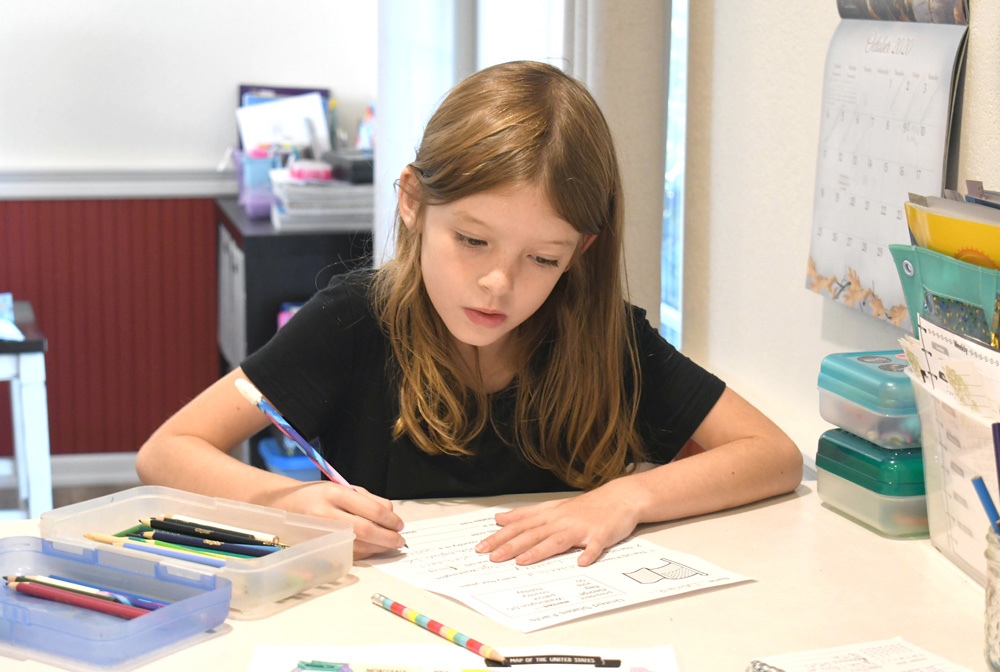
The challenge of teaching kids who are a range of ages has been ever-present during my homeschool journey. My oldest daughter Kiera is now 13 and in 8th grade. Our daughter Sylvie is 11 and she’s a grade ahead, doing 6th grade work. My son Joshua is 10, in 4th grade, and very active and imaginative.
To keep our crew of kids organized and on task, I have a schoolwork task list for each child. I used to write down individual tasks at the beginning of each week. However, now we’ve standardized with completing Math, Language Arts, spelling, and handwriting each day. Other school subjects we do as a group, such as Science, History, and Geography. The tasks list allows my kids to pace themselves and work independently with my simple guidance and occasional help. Independent success is very necessary because we also have a 2-year-old girl in our family! As long as each child knows what they are supposed to do, our school day usually goes well.
Fun Kids Learning Activities
We do a lot of activities to make learning fun!
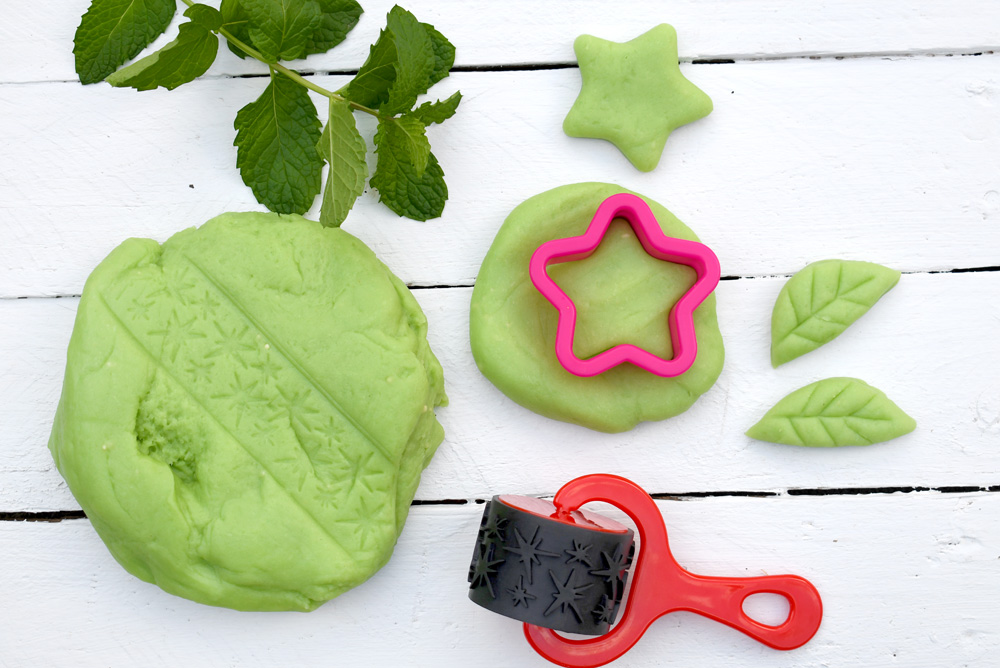
Homemade playdough is always a hit! Mix up a batch of homemade playdough in any color! Add glitter and a fragrance too! All you need to make playdough is water, vegetable oil, salt, cream of tarter and flour. My kids love playing with this soft salt dough.
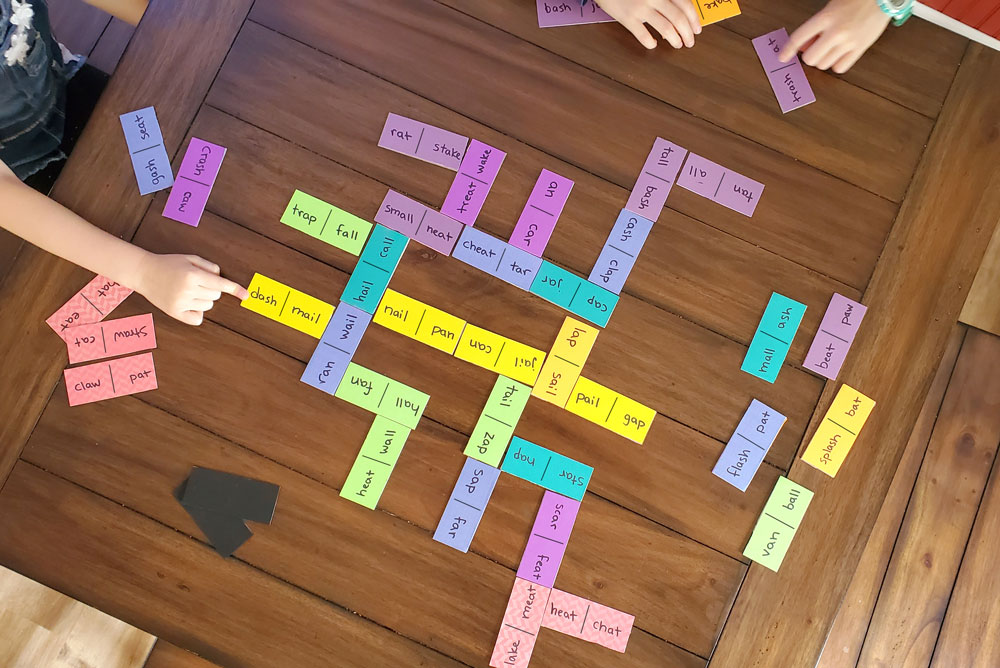
Play a game of word family dominoes with your kids to reinforce phonics concepts. Learn how to make the game pieces using word family lists for your kids ages and grade levels.
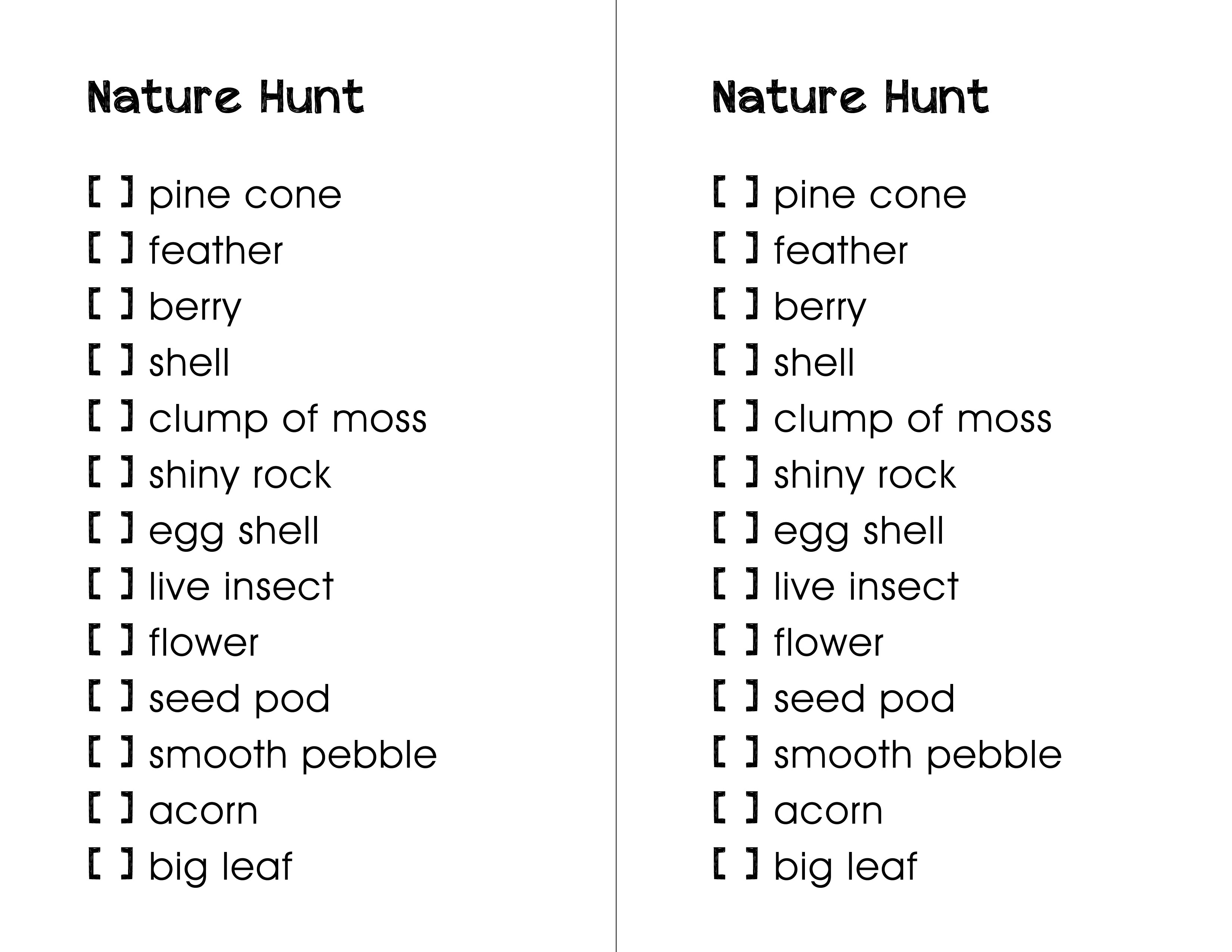
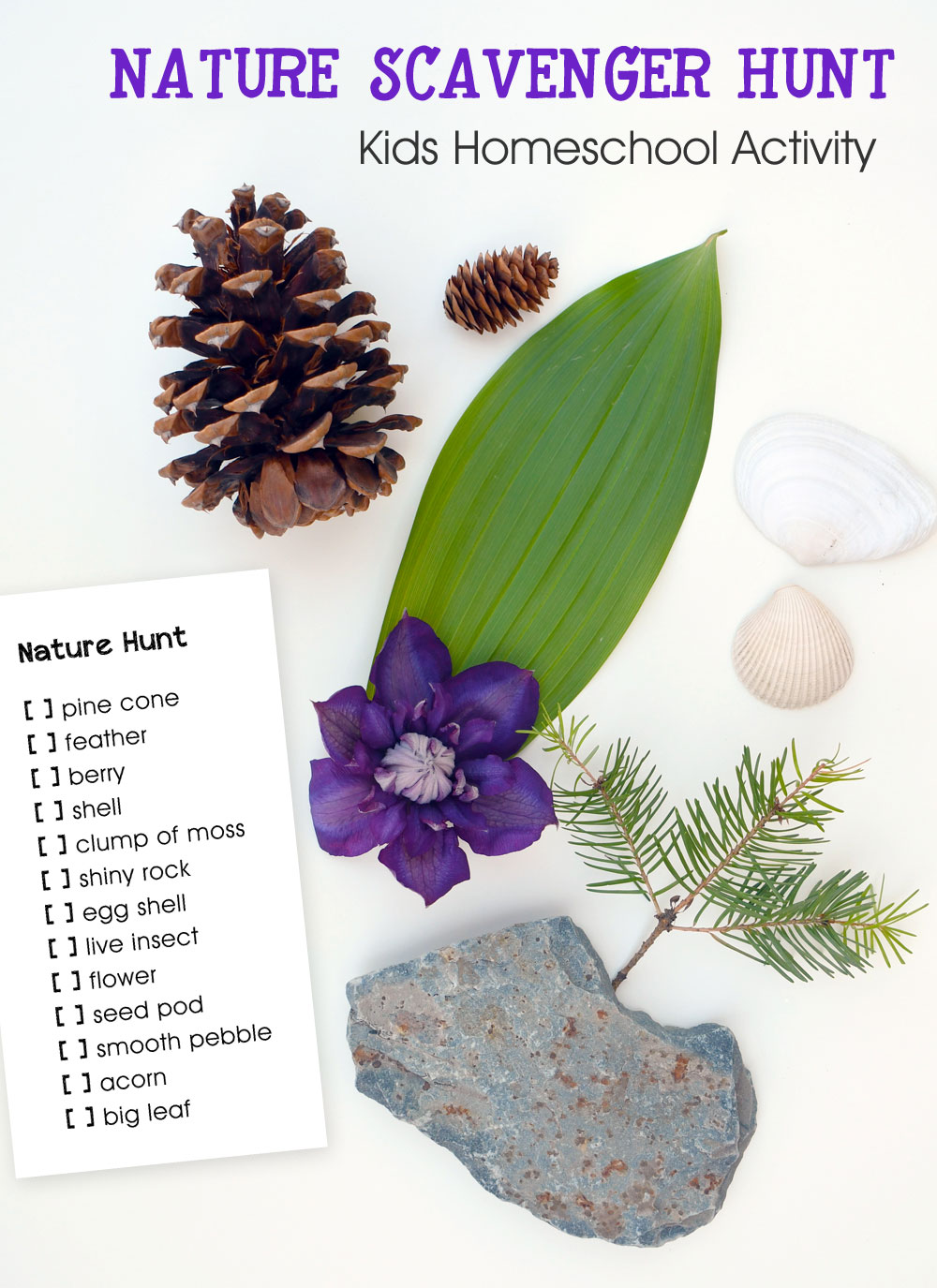
When my kids were younger, they loved hunting for backyard treasures. Take kids on a a nature scavenger hunt to look for feathers, shells, interesting rocks and moss. Kids will love discovering what kinds of treasures they can find in their own backyard. Exploring the outdoors is a great opportunity to view nature up close and prompt future unit studies! This fall my kids learned about how plants convert light into energy through photosynthesis. We also love watching nature shows to see how plants and animals interact with and contribute to their ecosystems.
Nature Hunt Printable
Download, save or print off this Nature Hunt printable for your own use. Click the image to open the printable a new window and print it off. To download, right click the image to “save as”.
Pin this to Pinterest
With a little planning and a few tips to stay organized, you can enjoy a lot of success with teaching your kids at home. The most important part of my homeschooling tips for parents is to cultivate a love for learning, and to make learning fun!

Hi, I’m Katie! I live with my husband and 4 kids in Coeur d’Alene, Idaho. I love Jesus, coffee, creative projects, photography, and traveling. I’ve previously worked as a web designer, journalist, and barista. I hope you enjoy our creative projects and family adventures!

 See our creative projects, kids activities, & party ideas »
 Homeschool Tips & Ideas »
 @createplaytravel on YouTube »
 Europe with Kids Video Episodes »