Homemade slime is a great way for kids to get their hands dirty and practice chemistry in the kitchen. This kid-friendly glitter slime recipe uses 3 simple ingredients, which once combined, create fascinating stretchy slime! The glitter slime no borax ingredients are completely harmless, because this recipe contains contact solution instead of borax. My kids can experiment with this easy DIY sensory slime recipe on their own! We made a bunch of colors and added some fun mix-ins to our slime variations.
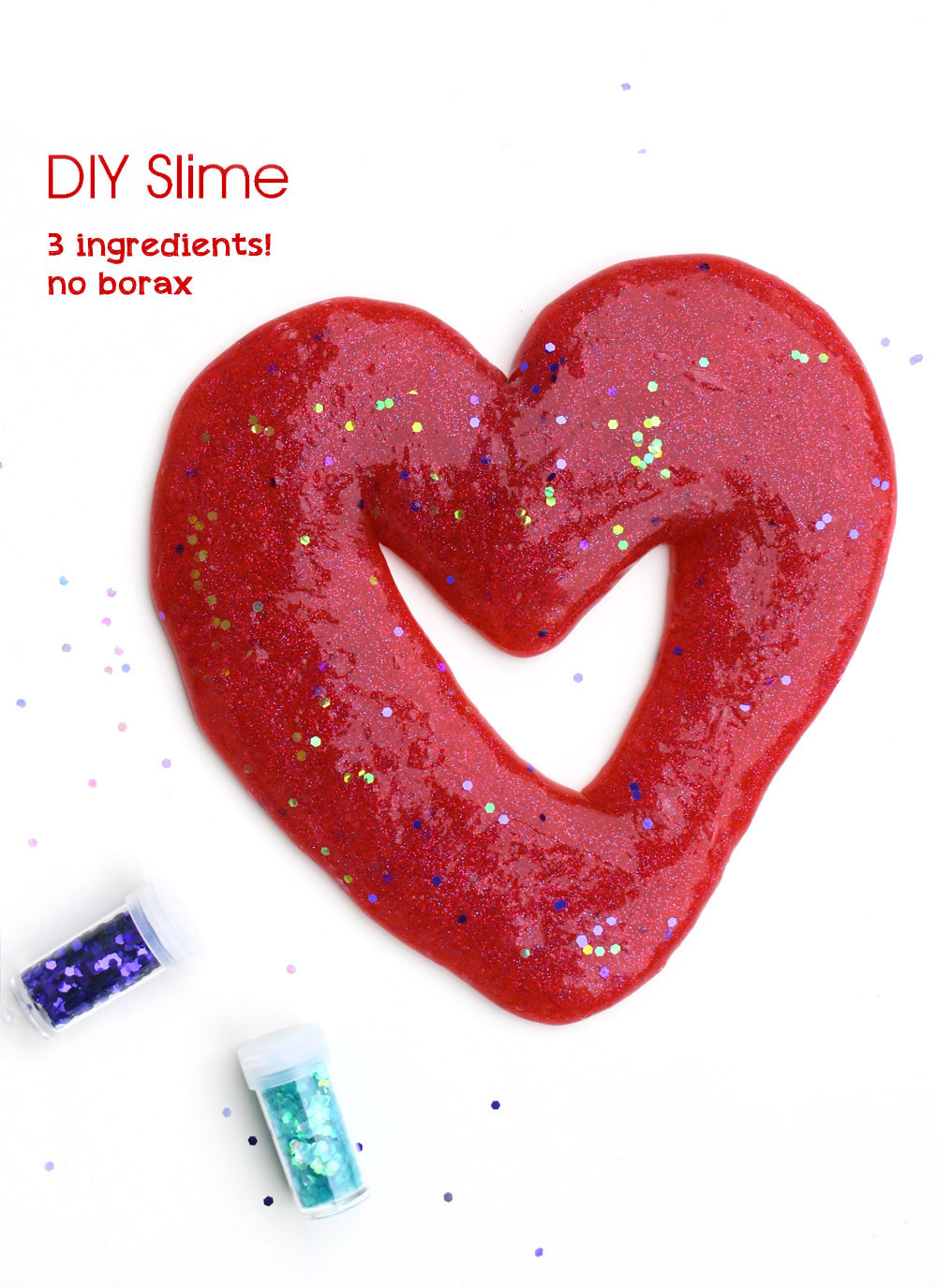
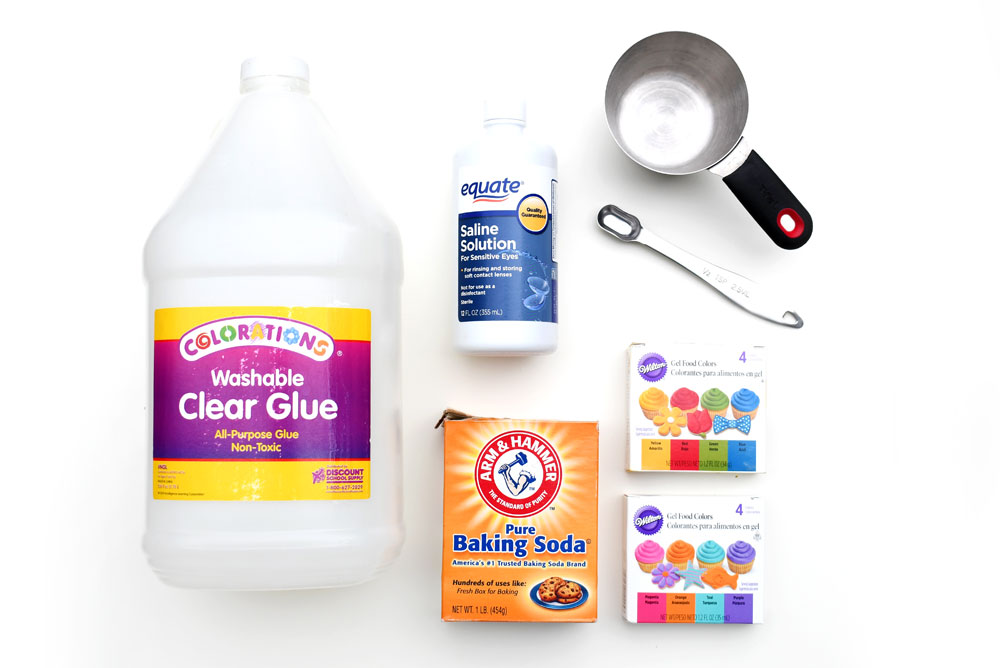
This awesome DIY sensory slime recipe for kids is a gentle alternative to slime recipes that contain borax or liquid starch. All you need for this fun kids activity is clear glue, baking soda, and generic contact solution.
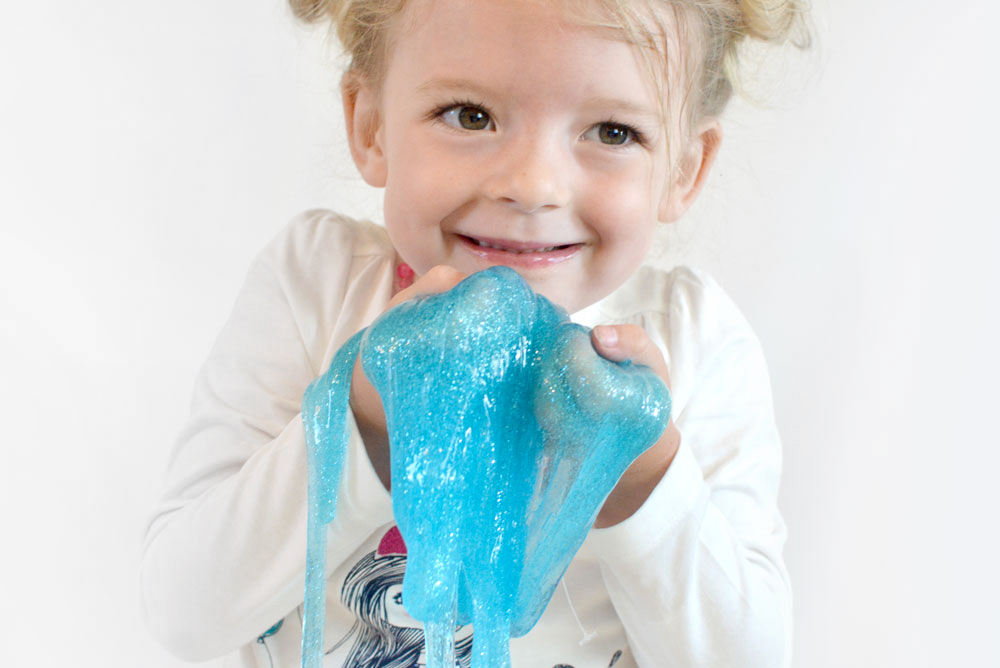
Glitter Slime with Baking Soda & Contact Solution
DIY Slime Ingredients
- 1 cup clear glue
- 1/2 tsp. baking soda
- food coloring / glitter (optional)
- contact solution (with ingredients boric acid and sodium borate)
Mix up any combination of liquid slime using clear glue, baking soda and generic saline contact solution. Just make sure the contact solution contains boric acid and sodium borate. You can add a variety of mix-ins and food coloring to these basic slime ingredients. Whatever you add to your homemade sensory slime, it is important to add the contact solution last, after any other mix-ins. The contact solution is the activator that will give your slime its stretchy sensory texture.
How to Make Glitter Slime (No Borax)
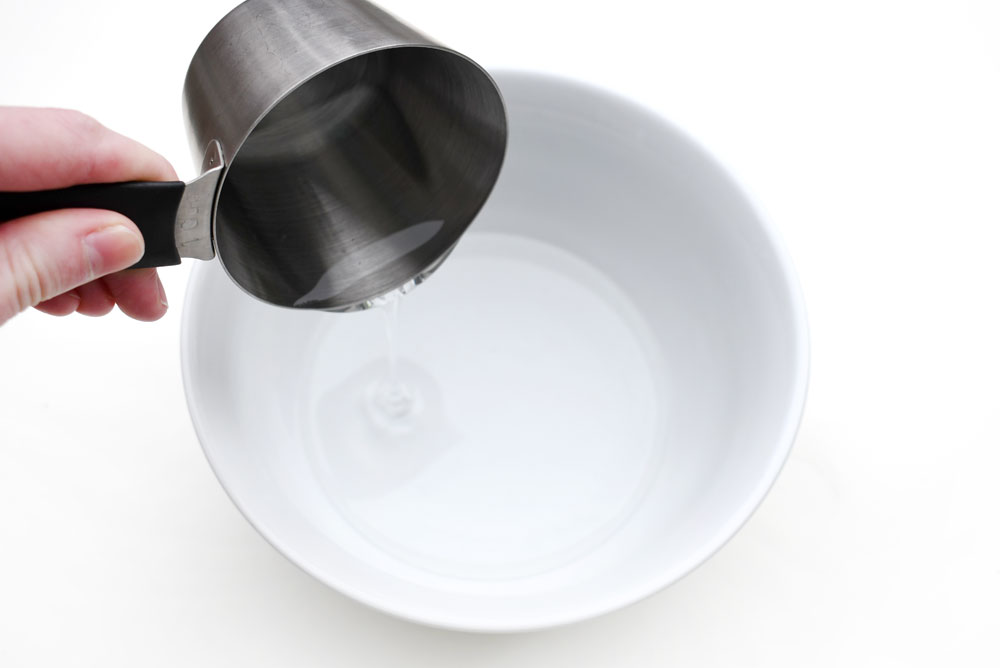
Step 1: Pour 1 cup clear craft glue into a medium mixing bowl. You can also use white glue to make opaque slime.
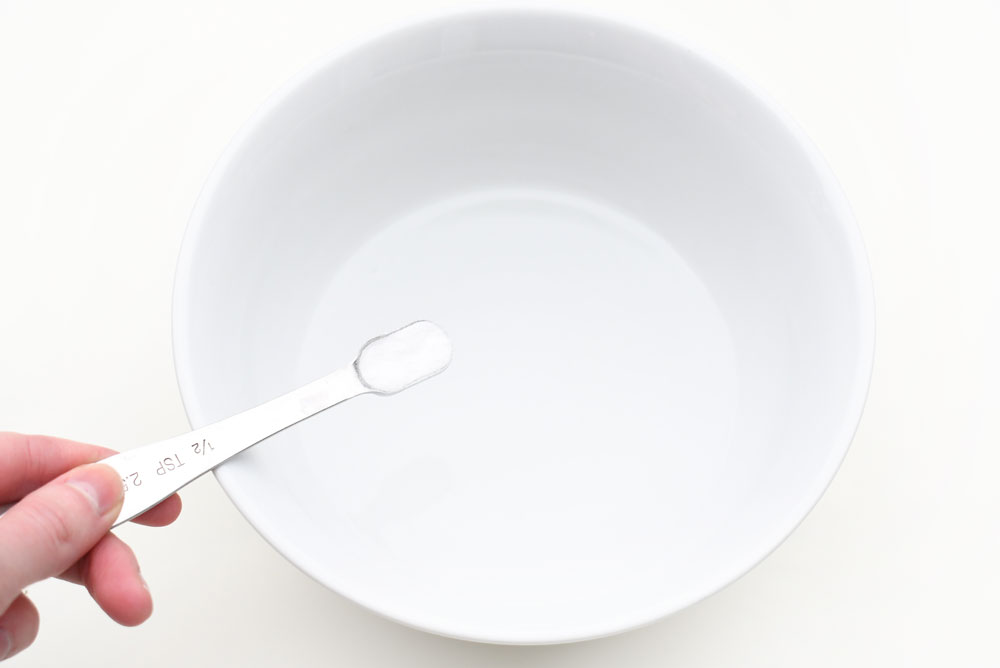
Step 2: Stir in 1/2 tsp. baking soda. The baking soda helps to give slime its firmness and substance, when it combines with the contact solution.
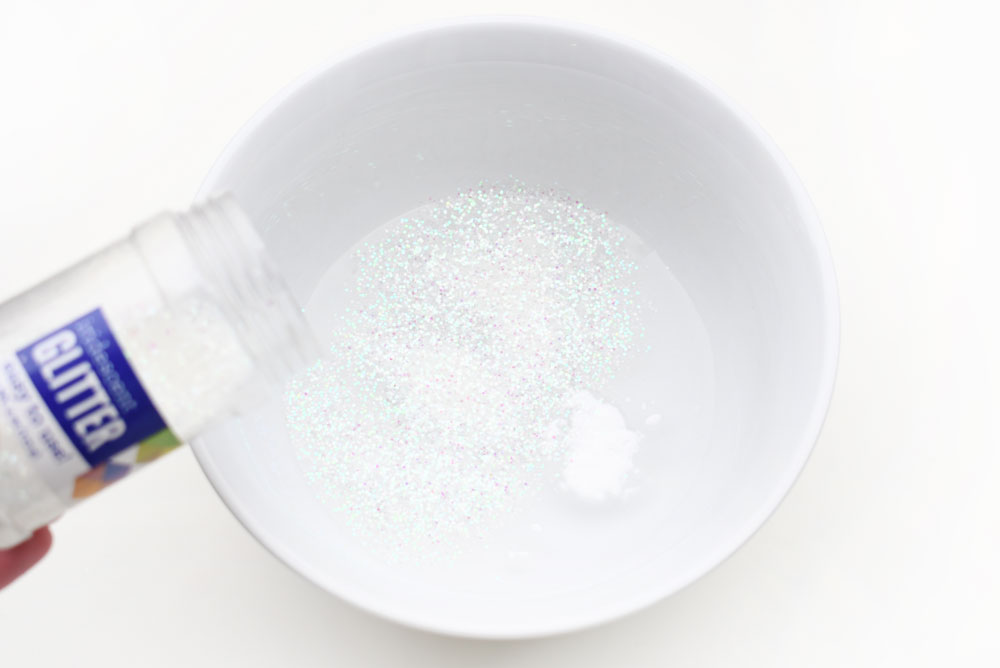
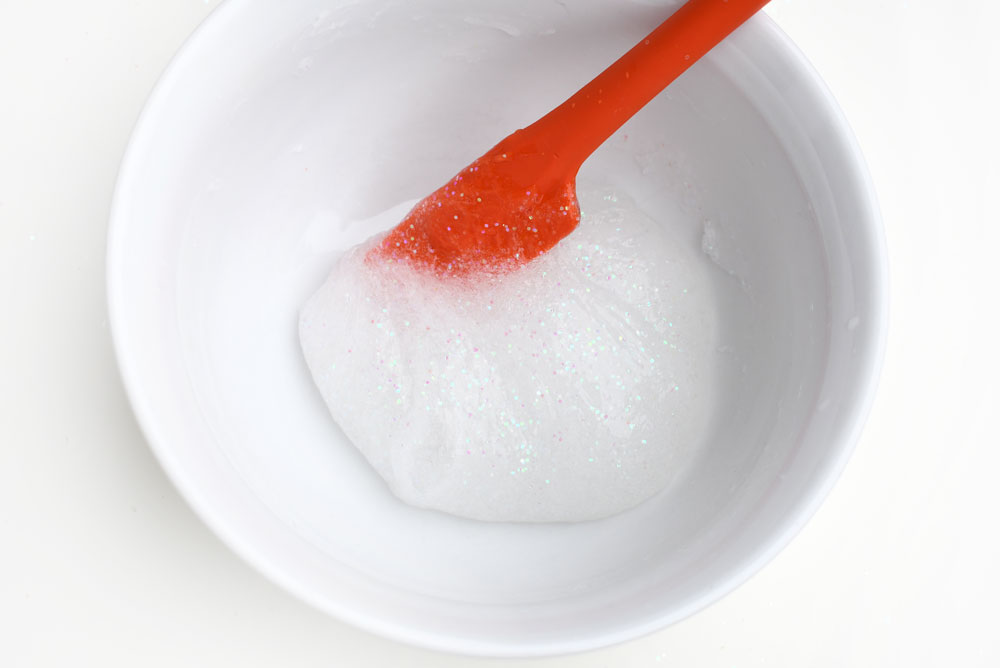
Step 3: Add a few drops of food coloring (if desired) and glitter, or other mix-ins. Stir until combined. It’s easiest to add extra mix-ins into the slime at this step. Once you add the contact solution, it will “activate” the slime.
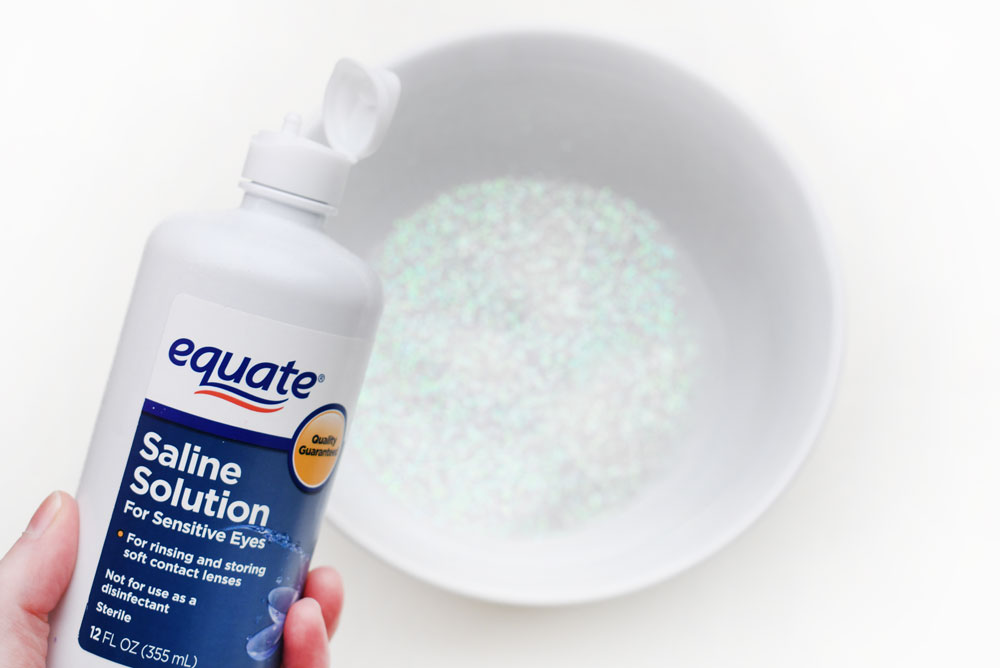
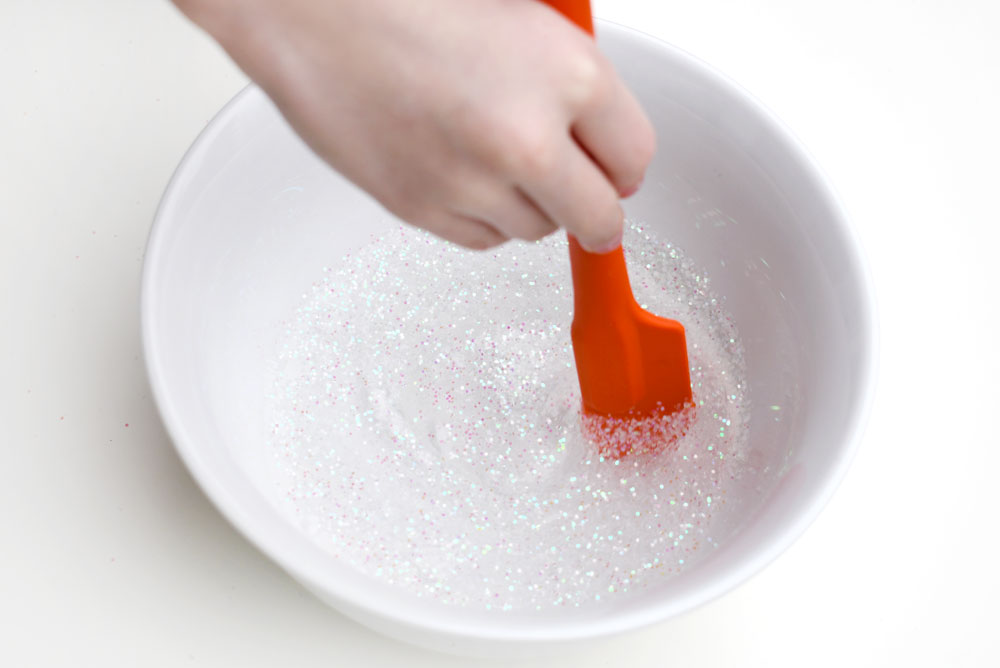
Step 4: Add a squirt of contact solution. Stir the contact solution into the slime ingredients with a spatula or spoon. The slime will be goopy at first and then get stringy. Finally, it will turn into smooth slime that stretches and flows. The more you play with slime, the better it gets!
Glitter Slime (No Borax)
Materials
- 1 cup clear glue
- 1/2 tsp. baking soda
- 2-3 drops food coloring (any color)
- 1 tsp. glitter (any color)
- 1 tbsp. contact solution (with ingredients boric acid and sodium borate)
Instructions
- Measure out the clear glue into a small mixing bowl.
- Add the baking soda and stir the mixture.
- Add a few drops of food coloring and the glitter, and mix until combined.
- Mix in the contact solution, which will begin the chemical reaction to create slime!
How Slime Works
You can make glitter slime no borax by creating a chemical bond called a cross-link to make the glue molecules stick together. The baking soda produces the cross-link when it combines with the boric acid and sodium borate in the contact solution. The more contact solution you add, the thicker the slime becomes. If your slime gets too thick and brittle, you can add a spoonful of water to make it more stretchy.
Glitter Slime with Water Beads
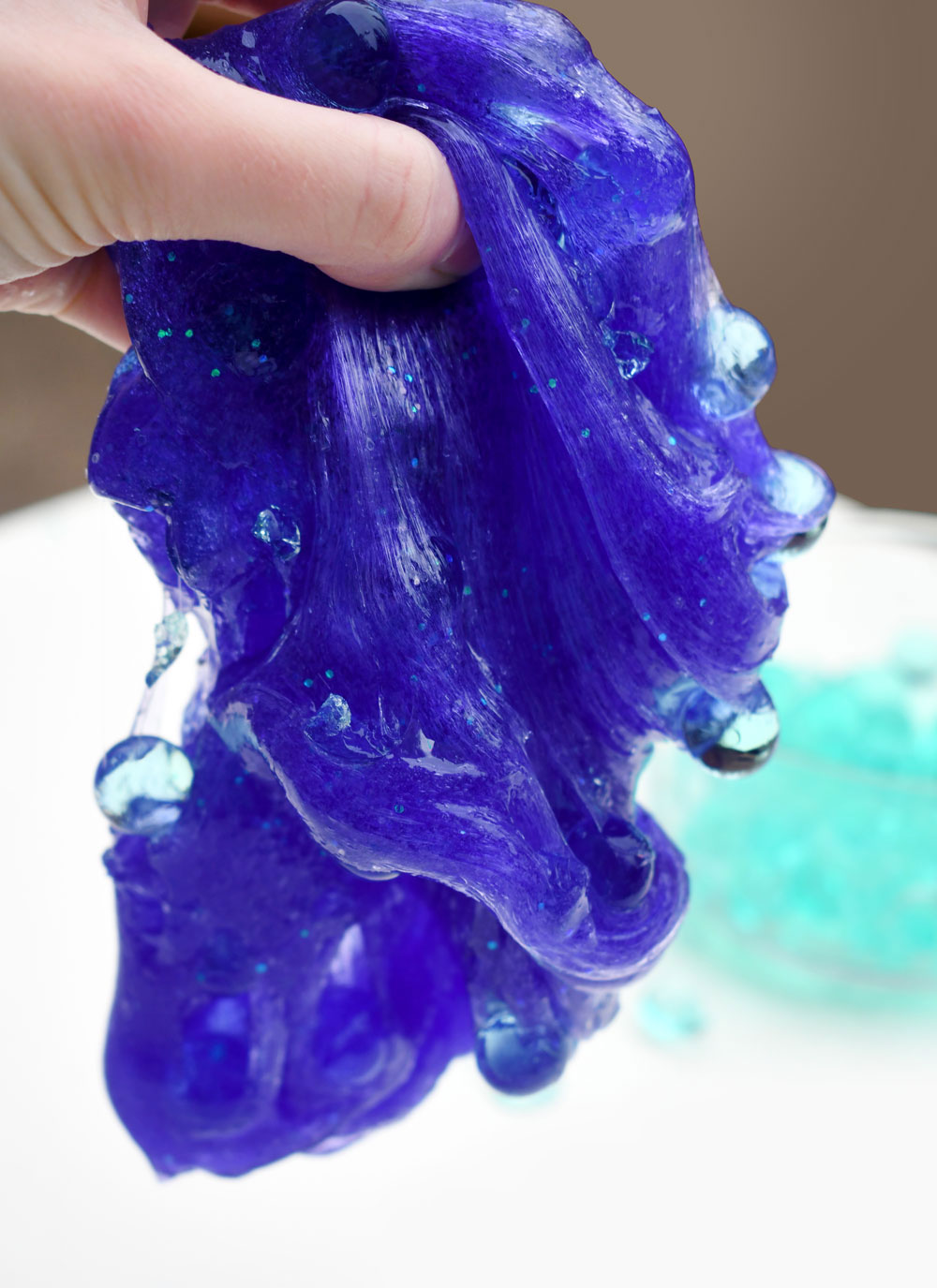
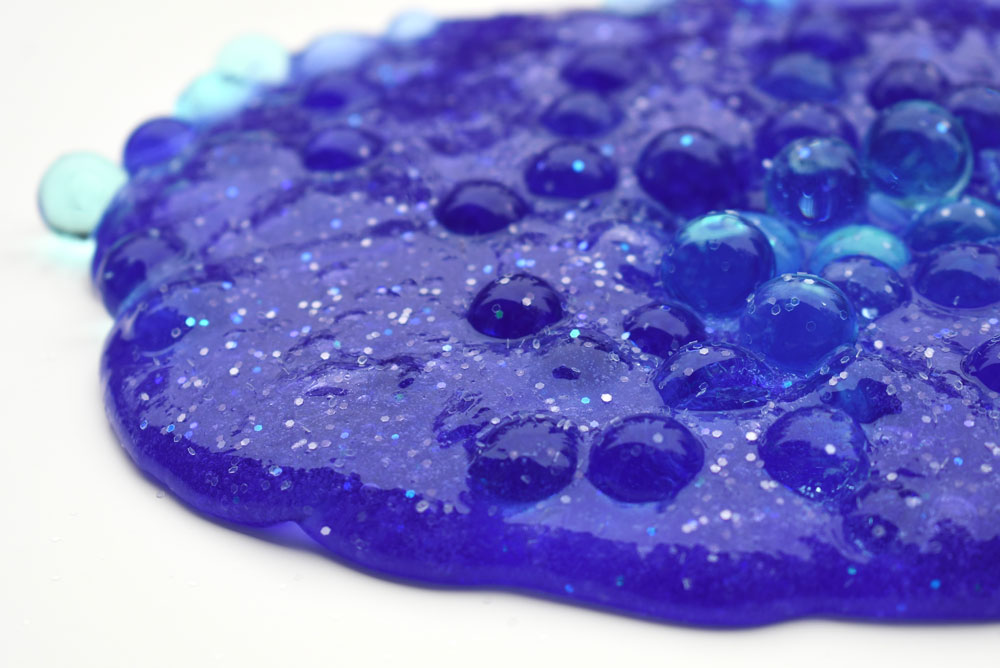
Once you’ve made basic slime, you can add extra textures as a mix-in. We made a batch of purple slime using craft glue, baking soda, food coloring and contact solution. Then we mixed in a handful of aqua water beads.
The water beads didn’t stick to the slime but they did give the slime a slippery, bumpy feel. The water beads also kept bouncing around. Because of this, water bead slime is best played with inside a tub or container of some sort. It’s fun to try to squish up the water beads while also squeezing the slime. Also, if you stretch the slime, the water beads will fall out of it. Adding water beads to slime is an interesting experience that allows kids to experiment with viscosity and adhesion (or lack thereof). Ultimately, slippery water beads don’t mix well into slippery slime, but the sensory combination is fun to play with.
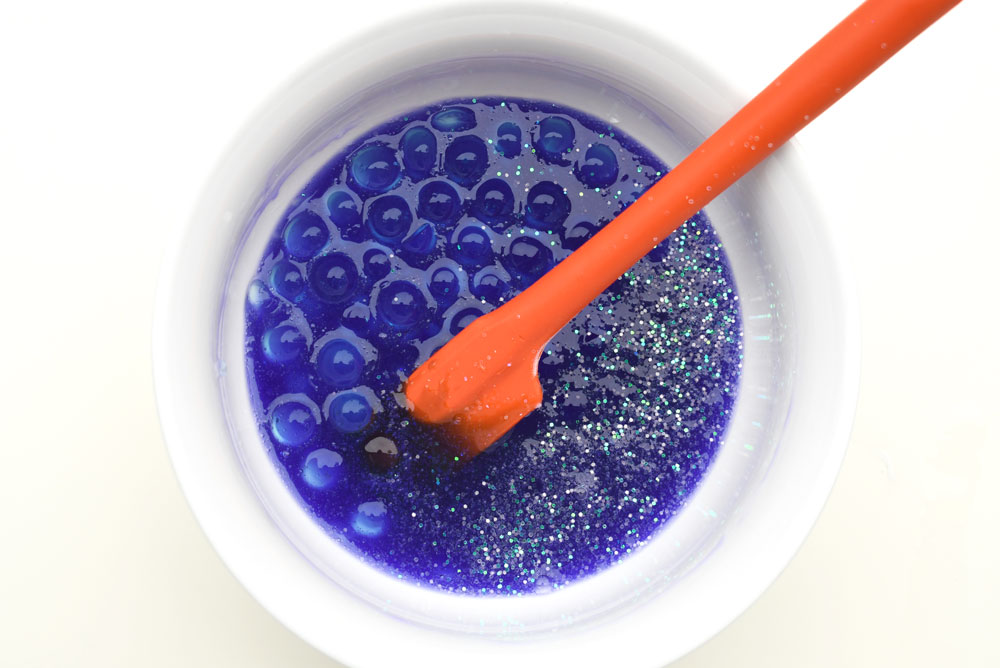
This purplish blue slime with glitter looks even more galaxy-inspired with aqua water beads mixed in. Kids can stretch this slime, mold it into shapes and fold it over onto itself. The water beads feel like jelly and remain separate from the slime when mixed together. The spheres bounce around and kids can split them apart or mash the water beads into smaller jelly particles.
Clear Slime with Coffee Grounds
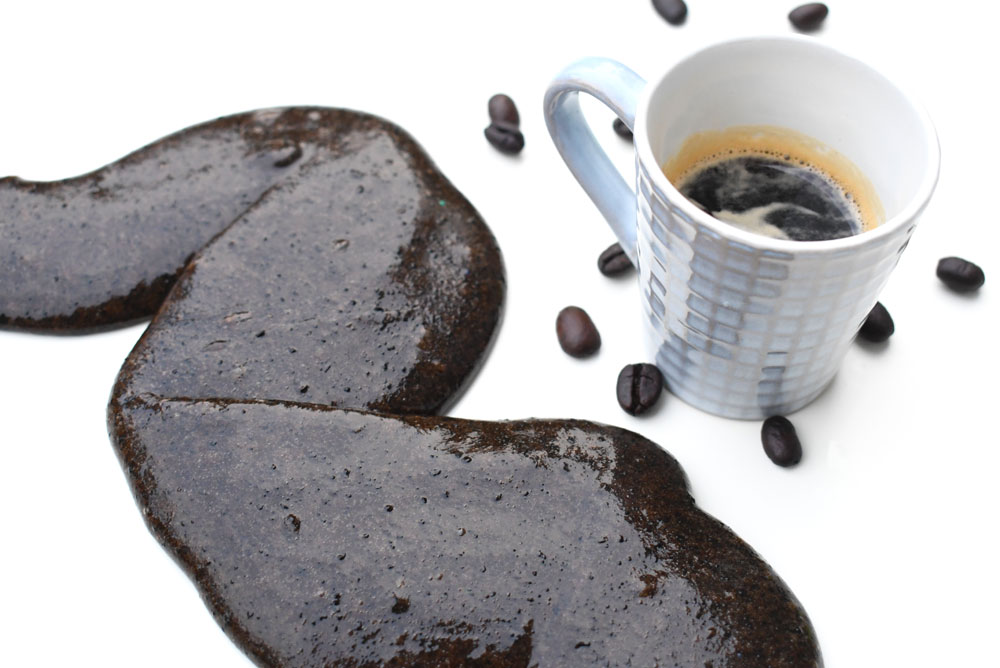
We also experimented with adding coffee grounds to slime. We made a batch of clear slime and mixed in a spoonful of freshly ground coffee beans (although a bit stale). Coffee ground slime acts very similarly to regular slime, although it’s a bit more grainy. The slime can be more or less dense, depending on how much of the coffee grounds you add. Coffee ground slime also smells very earthy.
This java-infused slime flows and stretches as you play with it. Just like glitter slime, if you pull it apart quickly the slime will break. My kids thought the coffee slime was a bit gross, but they were also somewhat fascinated by it. If you are experimenting with making a variety of homemade slime, coffee ground slime is worth trying out!
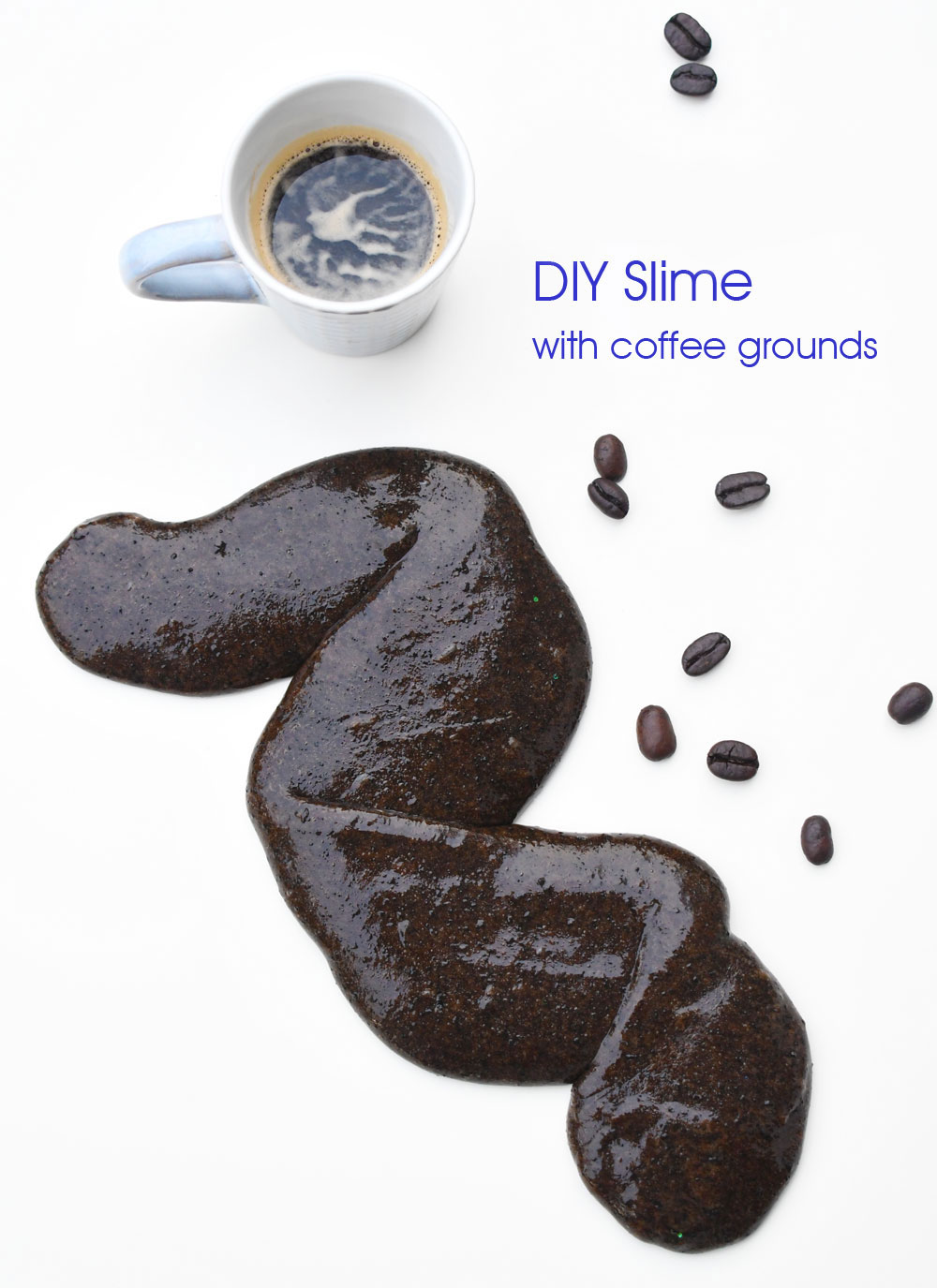
Add a scoop of coffee grounds to your slime to make earthy coffee slime!
Other Slime Mix-ins
It would also be fun to try making slime using confetti, tiny foam spheres, or even sprinkles. Some mix-ins will add some color to your homemade slime, such as crushed candy pieces. Making slime is a great hands-on science experiment and fun afternoon kids activity.
What would you add to your DIY sensory slime?
Find more creative activities for kids on our Kids Activities page!

Hi, I’m Katie! I live with my husband and 4 kids in Coeur d’Alene, Idaho. I love Jesus, coffee, creative projects, photography, and traveling. I’ve previously worked as a web designer, journalist, and barista. I hope you enjoy our creative projects and family adventures!




 See our creative projects, kids activities, & party ideas »
 Homeschool Tips & Ideas »
 @createplaytravel on YouTube »
 Europe with Kids Video Episodes »